
The Liturgy of the Word - Part 3
Part three of a series I'm writing for inclusion in the weekly Parish Bulletin for the Catholic Parishes of Dungog & Gresford

This eight-part series was originally published on the original The Doohan Discourse across May and June 2023.
At the end of Part 2, we had just concluded the First Reading with a moment of silence and were about to move towards the next part of the Liturgy of the Word.
When it comes to the Responsorial Psalm, a number of observations can be made, each of which is important given that the Responsorial Psalm “has great liturgical and pastoral importance, since it fosters meditation on the Word of God” (GIRM, n.61).
The first observation has to do with the very nature of the Responsorial Psalm itself. Coming from the Hebrew Scriptures, it is of the genre of psalmody or song, and thus, as the GIRM reminds us, “It is preferable for the Responsorial Psalm to be sung, at least as far as the people’s response is concerned” (n.61). Only when it is not possible for any part of the Responsorial Psalm should it be spoken in its entirety.
When the Psalm is being sung in part or in whole, the cantor or psalmist introduces the response by singing it. There is no need to announce “The Responsorial Psalm”; it simply emerges from the silence that preceded it.
The whole assembly then repeats the sung response as it will do after each verse sung by the cantor or spoken by the reader (depending on the circumstances). And the whole of the Responsorial Psalm set down for that day is thus proclaimed and meditated upon.
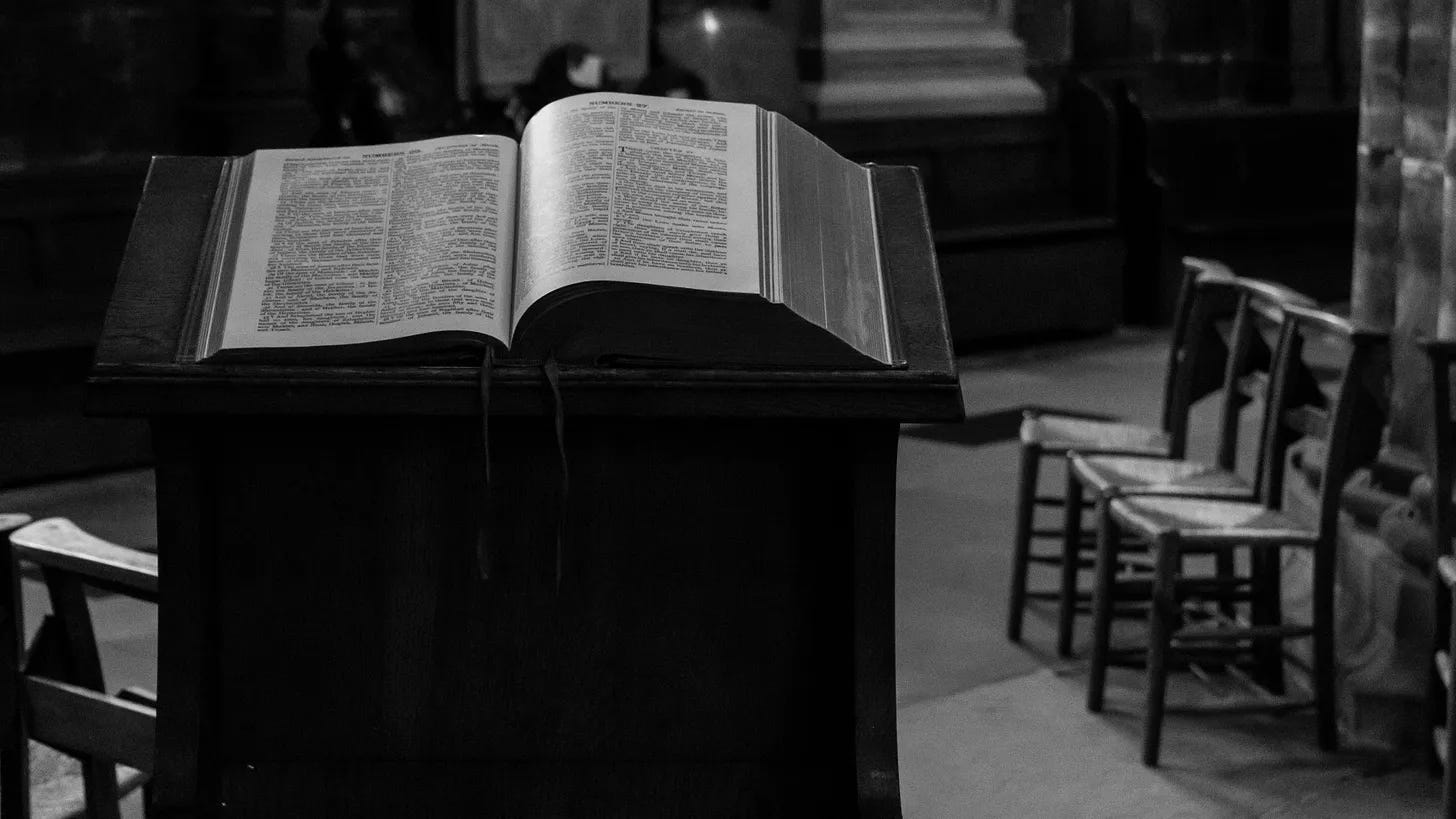
On those occasions when the Responsorial Psalm is being entirely spoken, the GIRM reminds us “that it should be recited in a way that is particularly suited to fostering meditation on the Word of God” (n.61).
There are several things that can be observed in this light. Firstly, the reader again does not need to say “The Responsorial Psalm”. Nor is there a need to say something like “The response is …”. If there has been a short period of silence before the Responsorial Psalm begins, everyone will know that the first words spoken (or sung) are going to be the response that the assembly will take up.
Secondly, when we proclaim a psalm in any context, we are proclaiming poetry. Proclaiming a psalm, including the Responsorial Psalm, is different to reading one of Paul’s letters, one of the Prophets, or, indeed, one of the Gospels. Even when not being sung, we need to honour the nature of what we are proclaiming and, in so doing, honour the Word of God that is being proclaimed.
Lastly and perhaps most controversially, we need to remember the responsorial nature of this part of the Liturgy of the Word: the reader who proclaims the verses of the Responsorial Psalm should not speak the response of the assembly. The nature of the Responsorial Psalm, particularly when spoken, is that of a dialogue, one against many, that needs to be honoured. It can be tempting to want to ensure the assembly says their part by saying it with (or for) them; a better option is to use pace and tone of voice to signal when it is time for the assembly to respond.
And that is the Responsorial Psalm. At the end of the Psalm, whether it has been sung or said, the reader returns to their seat—but only after the Psalm is concluded, not during the last response of the assembly. We have plenty of time, and one of the ways of avoiding undue haste during the Liturgy Word (see GIRM, n.56) is for the reader who leads the Psalm to stay in place until the Psalm is entirely finished before leaving the Ambo.
Only when the person who led the Responsorial Psalm has returned to the seat does the second reader move from their seat towards the Ambo, ready to proclaim the Second Reading, which customarily is taken from the non-Gospel New Testament. There is no need to hurry, and there is no need to coordinate the movements of the two readers so that meet at the foot of the sanctuary; one departs, and then the other arrives.
As intimated in our discussion on the First Reading last week, the Second Reading begins with a ritual introduction, i.e., “A reading from …”. We do not say, “The second reading is a reading from …” or announce “Second Reading” and then make the introduction. We simply and confidently say, “A reading from …”; any other addition remains unnecessary and superfluous.
Again, we do not proclaim the Heading of the reading, that part just under the introduction that is in italics. And, at the end of the reading, we announce “The word of the Lord”, avoiding what currently appears in our Lectionary until we get new ones.
And, in a similar manner to what happened after the First Reading, we then observe another short pause as an opportunity for meditation and reflection on what has been spoken to us and what we have heard.
And once again, depending on how the next element is going to be proclaimed, the second reader might be free to leave the Ambo or simply step back from the microphone and wait. It all depends on whether the Gospel Acclamation is going to be musically proclaimed or not.
But that can wait until Part 4!
To be continued...