
The Liturgy of the Word - Part 2
Part two of a series I'm for inclusion in the weekly Parish Bulletin for the Catholic Parishes of Dungog & Gresford

This eight-part series was originally published on the original The Doohan Discourse across May and June 2023.
In part 1, I began a short series on the nature of the Liturgy of the Word. In addition to a broad overview of the structure of the Liturgy of the Word, my focus was also on the often missing silence that is meant to be an integral part of this first major part of the Liturgy of the Word.
This week, I’d like to start moving through the Liturgy of the Word, part by part, offering some reflections on the ritual components that together constitute the whole of the Liturgy of the Word.
Firstly, however, it is important to note that the Liturgy of the Word—and the elements within it—are ritual actions. Because they are ritual actions, care is needed to ensure that we honour the way in which they are put together and not add anything that is not required. It is of the very nature of ritual—the language of liturgy—that there is a consistent application of what the liturgy requires rather than turning any part of the liturgy into a ‘personal vanity project’.
Fr Paul Turner, a liturgical scholar of renown, has a pithy statement—mostly directed towards his fellow priests, but also applicable to other liturgical ministers—that we do what is written in the missal, and we don’t do what is not there. It’s a good saying to remember!
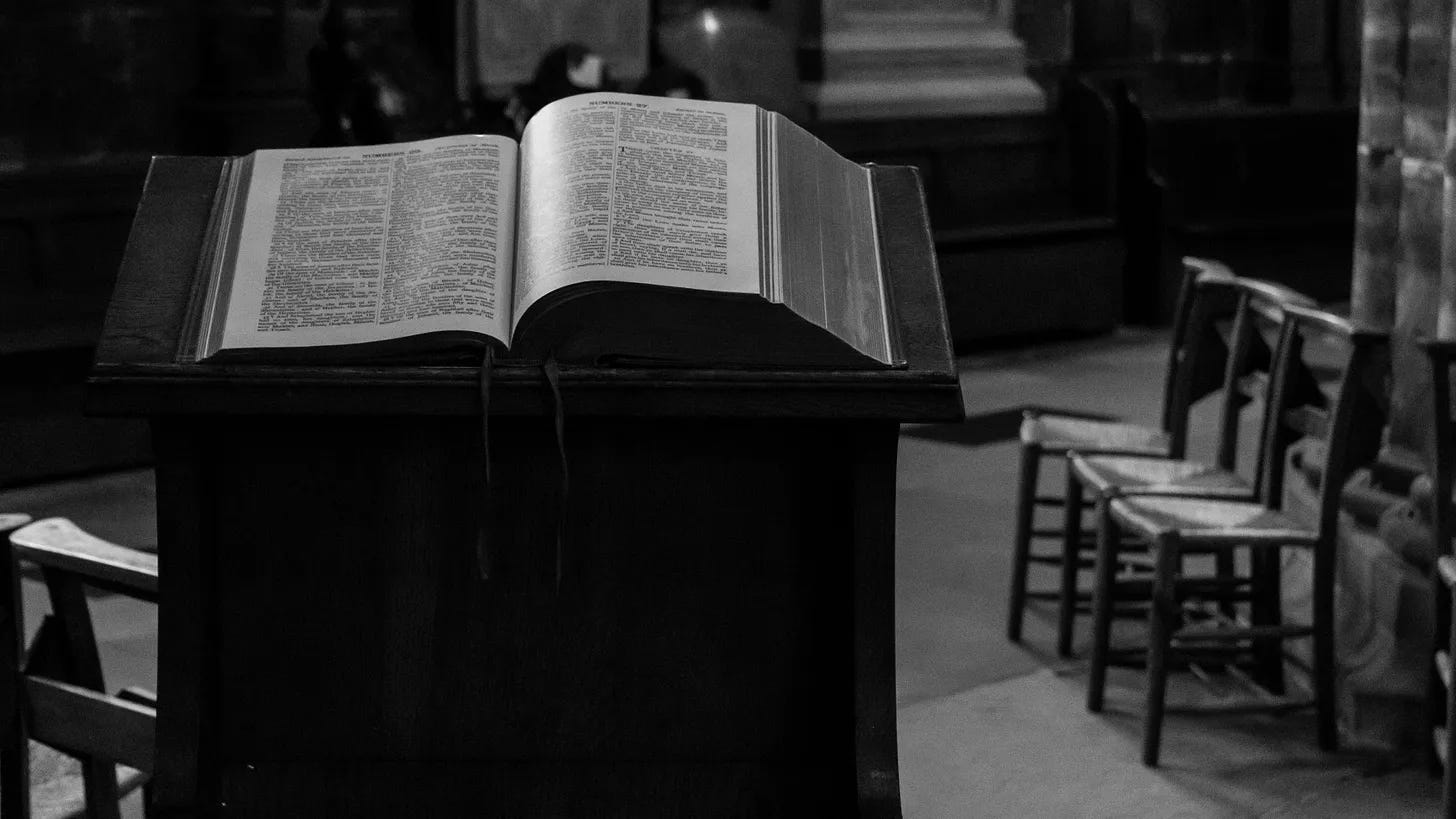
So let’s look at the Liturgy of the Word in more detail:
The beginning: As we saw last week, there is a suggestion in the Missal that a short period of silence precedes the beginning of the Liturgy of the Word. In other words, there doesn’t need to be a rush after the Collect to move straight to the First Reading.
As I mentioned in the last part, this could be easily achieved by the First Reader simply waiting until everyone is seated before moving from their seat to the Ambo for the reading. A simple yet very effective mode of achieving the intention of the Missal.
And yet, it is often not done. All too often, we can see at any liturgy people moving from their seats before the Presider has finished the Collect prayer—something that is a definite ‘no no’. When we are praying, we pray; we do not move on to the next part of the Mass before the previous part is complete.
When the first reader simply waits, the intended short silence is achieved, and the rest of the assembly has prepared themselves to sit and listen to God’s word being spoken.
This brings us to the First Reading, and the ritual nature of its structure and, thus, its manner of being proclaimed.
Much of what is about to be said can be applied equally to both the Second Reading and the Gospel.
The first reading begins with a ritual introduction, something along the lines of “A reading from …”. This ritual introduction is important because it reminds those who hear it that what is about to be spoken is the word of God, not a mere human invention.
It is important, therefore, that we honour this ritual introduction and not add anything to it. We do not say, “The first reading is a reading from …” or announce “First Reading” and then make the introduction. We simply and confidently say, “A reading from …”; any other addition is unnecessary and superfluous.
Likewise, we do not proclaim the Heading of the reading, that part just under the introduction that is in italics. These are a guide only and are not part of what is to be proclaimed publicly during the celebration of Mass.
And lastly, at the end of the reading, we announce “The word of the Lord”. This ending has been part of the Missal since the last translation in 2010, and we need to be aware of the change and implement it accordingly. When we (eventually) get a new lectionary—a project that has been ongoing since before 2010—the updated ending will appear in it. Until then, we need to ignore “This is the word of the Lord” and stick to “The word of the Lord”.
The shift to the ‘new’ ending represents a better translation of the Latin text (“Verbum Domini”). Also, it aligns the proclamation with the phrases used during Communion, i.e., “The Body of Christ” and “The Blood of Christ”. This was a deliberate move in the current translation and, again, in keeping with the maxim of Fr Paul Turner, we need to adapt to do what the Missal requires of us.
And after the rest of the assembly has answered, “Thanks be to God”, the next thing to happen is, well, nothing. There is another short pause that comes immediately after the First Reading is proclaimed, as an opportunity for meditation and reflection on what has been spoken to us.
At this point, on those occasions when the Responsorial Psalm is being sung in its entirety, the first reader is free to move away from the Ambo and back towards their seat. If the reader is going to lead all or part of the Psalm in spoken form, then they simply step back from the microphone and wait—easier said than done in a world where silence is something to be filled rather than something to be embraced!
To be continued...