
The Liturgy of the Word - Part 1
Part one of a series I'm writing for inclusion in the weekly Parish Bulletin for the Catholic Parishes of Dungog & Gresford

This eight-part series was originally published on the original The Doohan Discourse across May and June 2023.
The Liturgy of the Word is one of the two major divisions in the celebration of Mass. It also features in many of the other liturgical rites of the Church, e.g., the celebration of Baptism, Funerals that do not involve Mass, Confirmation, etc.
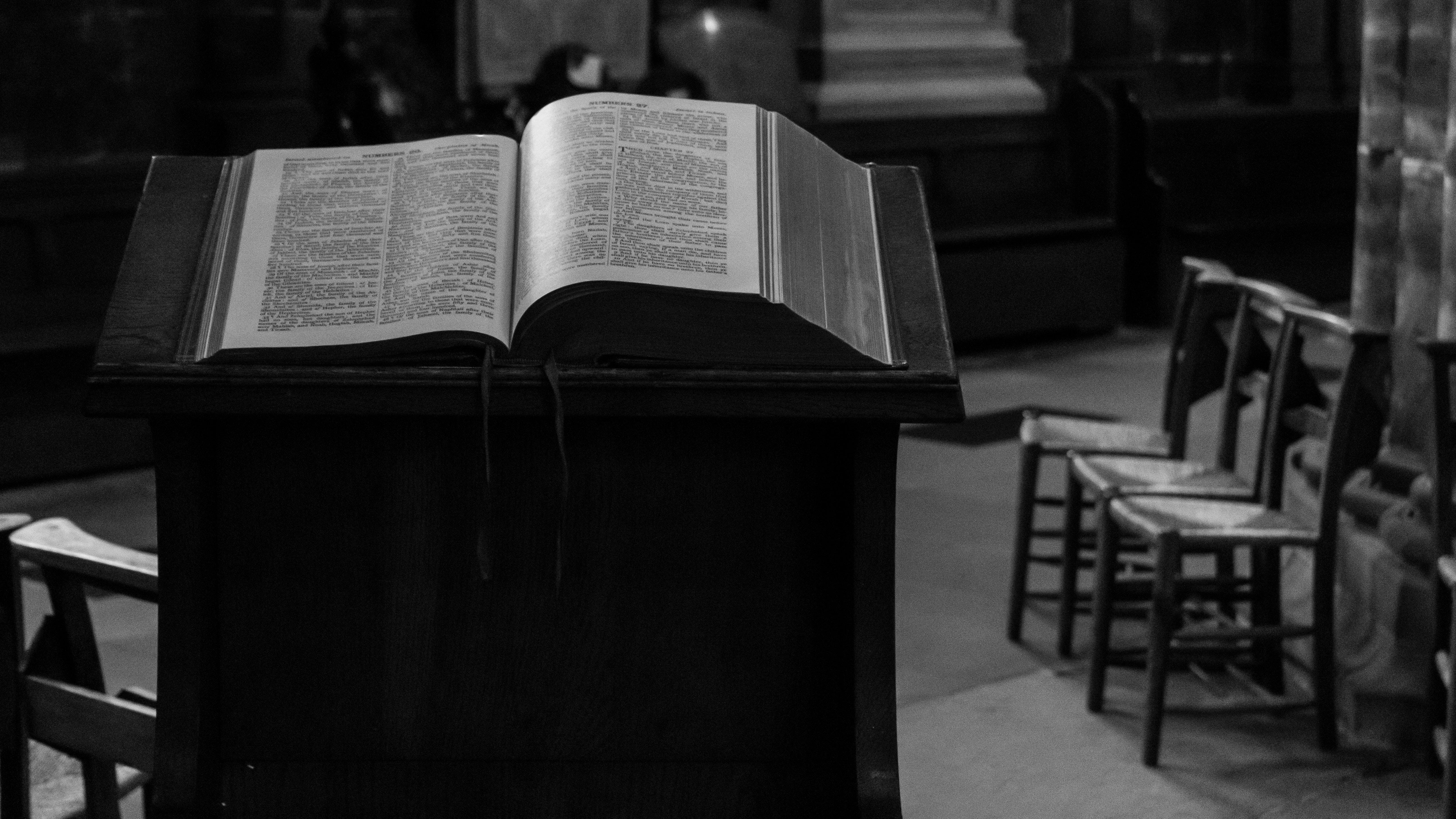
The Liturgy of the Word is focused on the Ambo, one of the two tables from which we are fed each and every time we gather (the other being the Altar).
The word ‘ambo’ has its origins in a Greek word that refers to a raised desk or pulpit. It should not be confused with the word ‘lectern’, which usually refers to a more temporary device (such as the one I use near the chair).
So what constitutes the Liturgy of the Word? The General Instruction of the Roman Missal (GIRM), says this:
The main part of the Liturgy of the Word is made up of the readings from Sacred Scripture together with the chants occurring between them.
As for the Homily, the Profession of Faith and the Universal Prayer, they develop and conclude it. For in the readings, as explained by the Homily, God speaks to his people, opening up to them the mystery of redemption and salvation, and offering spiritual nourishment; and Christ himself is present through his word in the midst of the faithful.
By silence and by singing, the people make this divine word their own, and affirm their adherence to it by means of the Profession of Faith; finally, having been nourished by the divine word, the people pour out their petitions by means of the Universal Prayer for the needs of the whole Church and for the salvation of the whole world. (n.55)
At Sunday Masses, there are three main readings from Sacred Scripture—the First Reading from the Old Testament (except during the Season of Easter, when it comes from the Acts of the Apostles), the Second Reading from the non-Gospel New Testament, and then the Gospel. In between the First Reading and the Second Reading, we have a Responsorial Psalm (ideally sung, but there are always exceptions). Between the Second Reading and the Gospel, we have the Gospel Acclamation. After the Gospel, we move through the Homily, the Profession of Faith, and the Universal Prayer in quick succession.
So what appears to be missing?
What often gets overlooked in the celebration of the Liturgy of the Word is silence.
The GIRM has this to say about the role of silence during the celebration of the Liturgy of the Word:
The Liturgy of the Word is to be celebrated in such a way as to favour meditation, and so any kind of haste such as hinders recollection is clearly to be avoided. In the course of it, brief periods of silence are also appropriate, accommodated to the assembled congregation; by means of these, under the action of the Holy Spirit, the Word of God may be grasped by the heart and a response through prayer may be prepared. It may be appropriate to observe such periods of silence, for example, before the Liturgy of the Word begins, after the First and Second Reading, and lastly at the conclusion of the Homily. (n.56)
How are such brief silences achieved? That all depends on those who are proclaiming the readings in the first place, and yet are simply done.
For example, the silence before the Liturgy of the Word begins can easily be achieved by the first reader waiting until everyone is seated before moving from their own seat to the Ambo. It’s a small change but allows for silence to be observed.
The silence after the First Reading is easily achieved by the reader inserting a short pause (perhaps a slow count to ten by way of example) before moving on to lead the Responsorial Psalm. When the Psalm is sung, in part or in full, the musicians can likewise insert a short pause before beginning. A similar practice can be adopted by the reader proclaiming the Second Reader. When the Gospel Acclamation is being sung, in part or in full, the Second Reader does not need to stay at the Ambo; and the musicians can insert the pause before they begin the Gospel Acclamation.
Another way of avoiding undue haste during the Liturgy of the Word, particularly when two different readers are involved, is for them to move to the Ambo separately rather than together, with the second reader not moving from their own seat until the first reader (who may also have led the Psalm) has returned to their seat.
These are minor changes, but ones that are in keeping with the nature of the Liturgy of the Word and our need to be nourished from this first table before we move on to the second.
To be continued...