
The Introductory Rites - Part 5
Part five of a series I'm writing for inclusion in the weekly Parish Bulletin of St Francis of Assisi Parish, Dungog Gresford

At the end of Part 4, we had finished our look at the Entrance Chant and were ready to move on to what happens next.
And in order to move forward we must first take a small step back, back to the last purpose of the Entrance Chant we have already examined, i.e., to “accompany the procession of the [Presider] and ministers” (GIRM, n.47).
As we have already discussed, the procession is not the only or the primary purpose of the Entrance Chant, but it is during this song that the relevant liturgical ministers move through the gathered Assembly towards the sanctuary of the church building, from which they will exercise their particular role for and within the Assembly.
The General Instruction of the Roman Missal says that
“When they have arrived at the sanctuary, the [Presider], the Deacon, and the ministers reverence the altar with a profound bow. Moreover, as an expression of veneration, the [Presider] and Deacon then kiss the altar itself; the [Presider], if appropriate, also incenses the cross and the altar”. (n.49)
This seems like a reasonable direction, clear and straightforward. The procession – regardless of how many people it might include – simply makes a profound bow to the altar, the ordained members of the procession venerate the altar with a kiss, and then, when it’s used, incenses the altar and the cross.
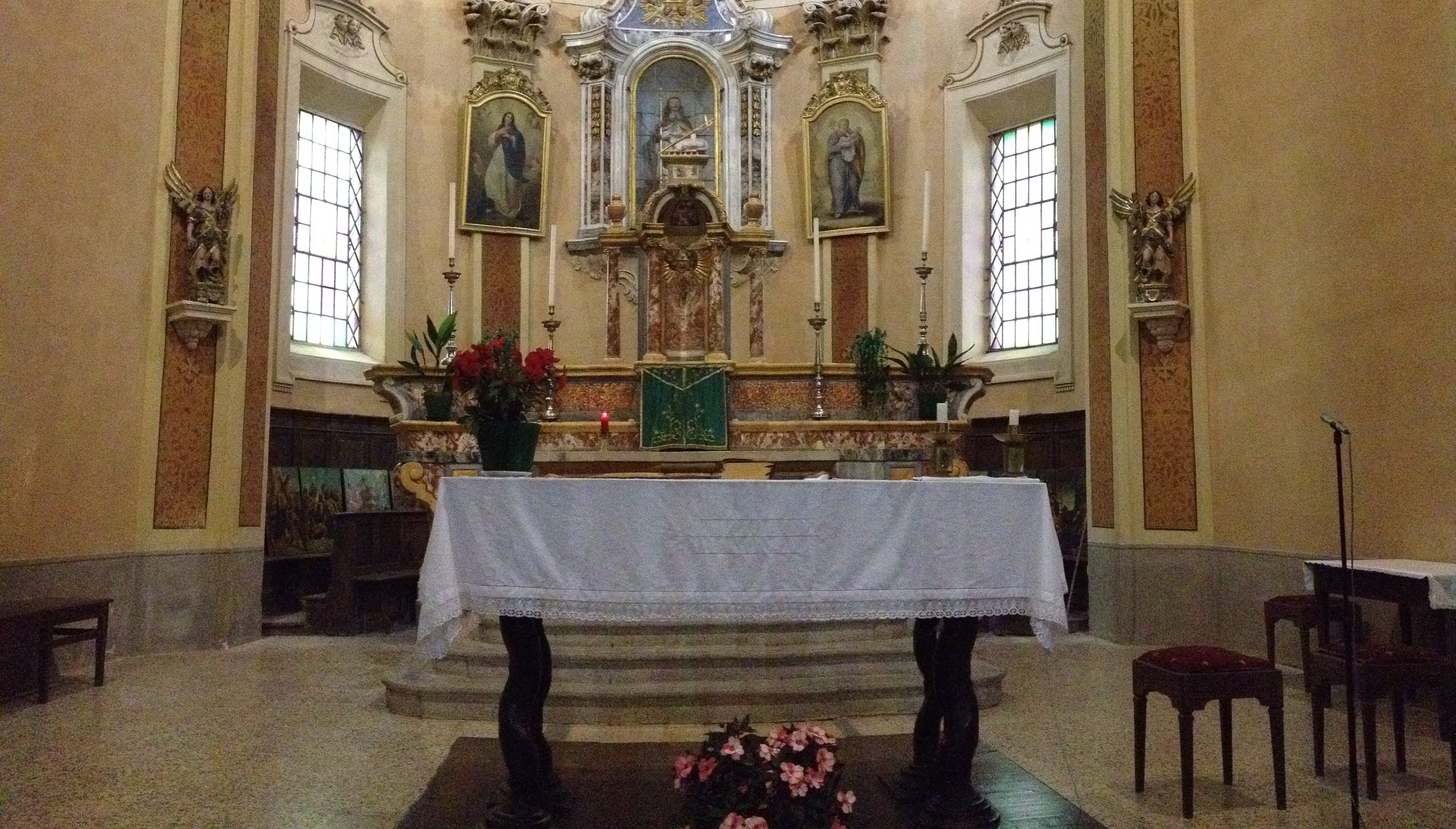
Which requires a couple of observations. Firstly, all the ministers, ordained or not, make a profound bow to the altar. A profound bow is one that is made from the waist and moves as close to ninety degrees as is possible for each minister. It is not a simple nod of the head, but a deeper way of reverence.
Obviously, if any members in the procession are carrying something, such as the cross, or candles, or the Book of the Gospels, the ability to make a profound bow is restricted and is replaced by a nod of head – but this is an exception to the usual practice for practical reasons.
Secondly, the ordained ministers venerate the altar with a kiss, as they will do at the end of Mass. The only other item that is venerated with a kiss is the Book of the Gospels, an action which highlights the connection between the ‘two tables’, i.e., the altar and the ambo.
Thirdly, you will notice that there is no mention of the tabernacle or of a genuflection towards the tabernacle. And this deliberate since during the celebration of Mass, the altar becomes the focus of the attention of the entire Assembly. Paragraph 274 of the GIRM has this to say in part:
“If, however, the tabernacle with the Most Blessed Sacrament is situated in the sanctuary, the Priest, the Deacon, and the other ministers genuflect when they approach the altar and when they depart from it, but not during the celebration of Mass itself.” (emphasis added.)
Fr Paul Turner, the great commentator on liturgical rubrics, opines that the phrase “not during the celebration of Mass itself” effectively rules out the need to genuflect at the start of Mass since Mass has started once “the people are gathered” (GIRM, n.47).
Such an interpretation is not universally agreed with and some participants in the entrance procession still prefer to genuflect towards the tabernacle. This is a legitimate choice, but such a genuflection does not replace the profound bow towards the altar that is required by paragraph 49; if you do genuflect, you are still obliged to make a profound bow.
It is only after the requirements of paragraph 49 are completed, the Presider moves to stand at the chair from which he will continue to direct the liturgical action of the entire Assembly.
The chair used by the ordained presider is symbolic of the particular role of presiding and directing the prayer of the Assembly. The chair used for this purpose must be clearly seen as the place where such activity is focussed and so the chair must be obviously different from other seating without being lavishly so. The presider’s chair is not a throne but is a chair that highlights the particular role of the ordained presider.
And what happens once the presider reaches the chair can wait until Part 6.
To be continued…