
The Introductory Rites - Part 4
Part four of a series I'm writing for inclusion in the weekly Parish Bulletin of St Francis of Assisi Parish, Dungog Gresford

We left Part 3 with us about to talk about the form of the Entrance Chant.
The General Instruction of the Roman Missal (GIRM) says
“This chant is sung alternately by the choir and the people or similarly by a cantor and the people, or entirely by the people, or by the choir alone.” (n.48)
This short opening sentence to this article contains a list and, like anytime we see a list in the GIRM, this needs to be read as a list in order of preference.
And that raises an interesting point worthy of some comment, particularly since the preferred option for the Entrance Chant is something that is sung alternately between either the choir or a cantor, and the rest of the Assembly.
Such a reality would be completely at odds with most people’s experience of the Entrance Chant, which is customarily sung “entirely by the people”, at least in most parishes in Australia.
And yet, singing alternately between two voices (choir/cantor v people) still achieves the purpose of the Entrance Chant as we discussed in Part 3, though it does so in a different manner than if the singing is undertaken by the entire Assembly singing as one voice.
The reason for this preference might be explained by where the Entrance Chant is drawn from, which we will come to shortly.
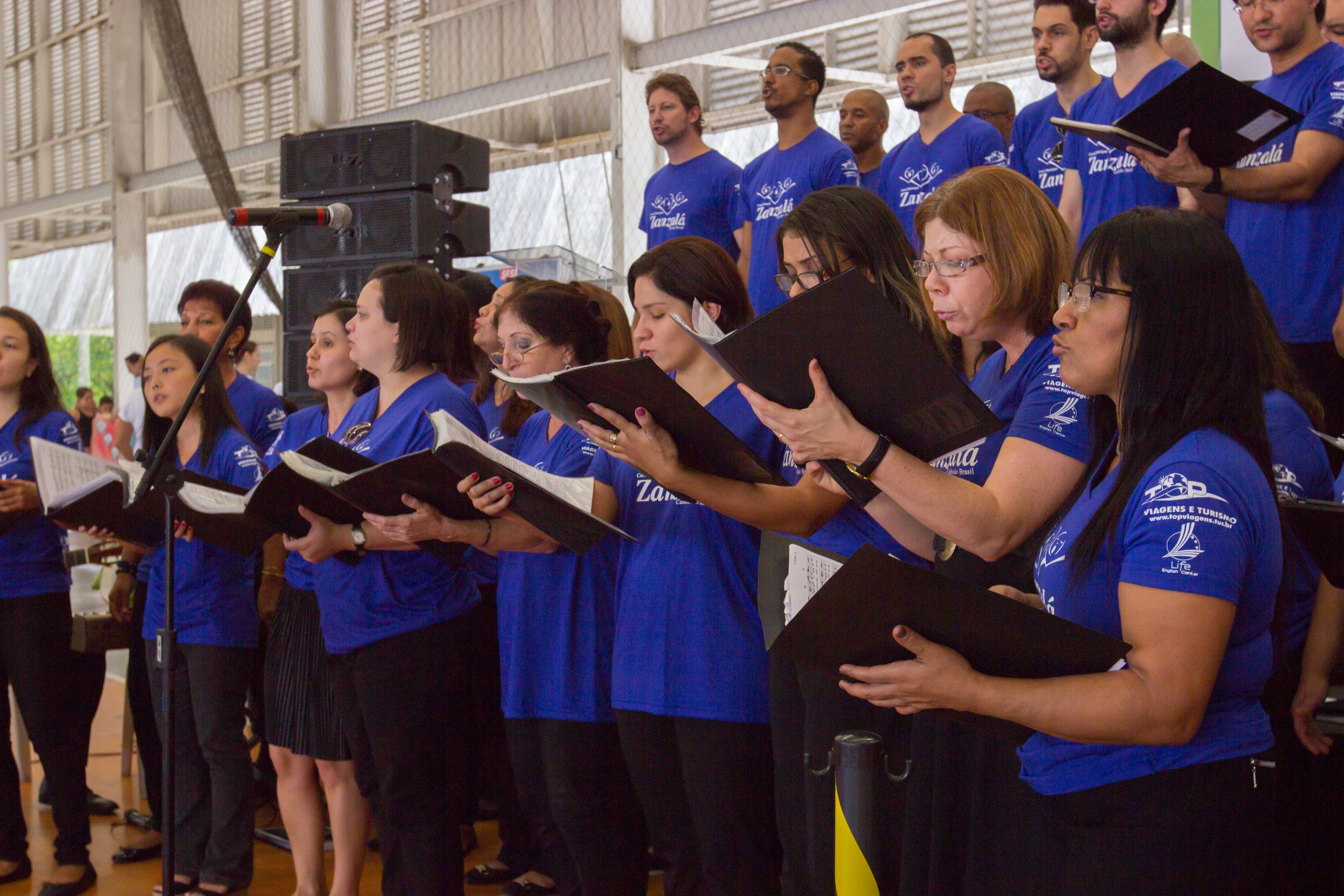
As mentioned, the middle option – of the entire Assembly singing – seems to the most prevalent option in most parish settings, while the last option – the singing by a choir alone – would be rare in Australia, particularly since, in my estimation, it does not quite manage to achieve the stated purpose of the Entrance Chant, inasmuch as the Assembly is ‘reduced’ to spectators.
So, if the first part of n.48 of the GIRM tells us how the Entrance Chant, the next part tells us what it might consist of. And again, there’s a list:
“It is possible to use the antiphon with its Psalm from the Graduale Romanum or the Graduale Simplex, or another chant that is suited to the sacred action, the day, or the time of year, and whose text has been approved by the Conference of Bishops.” (n.48)
The two Graduales are liturgical books that set out some of musical arrangements hinted at in The Roman Missal, including the antiphons used at the entrance and at communion. Most members of the Church will never come across either of these books as they are generally used only in a very few locations and not especially in the general parish setting.
The other option – “another chant that is suited to the sacred action, the day, or the time of year” – is more often that which is encountered in the parish setting. We know such chants as hymns or sacred songs, and there is a rich plethora of options available, some good, some less so.
It is interesting to note that the text of these hymns or sacred songs should be “approved by the Conference of Bishops”. Why? Well, because what we sing should mirror the faith of the Church in order to fulfill the purpose of the Entrance Chant. This is not a chance to sing just anything we like; it should be something that gives expression to what we believe.
And the Australian Bishops’ Conference does have a list of ‘approved’ music, although that is never complete since composers of music for the liturgy keep composing new pieces!
But what if singing is not possible for some reason? What happens then? The GIRM answers this by saying:
“…the antiphon given in the Missal is recited either by the faithful, or by some of them, or by a reader; otherwise, it is recited by the [Presider] himself…” (n.48)
And while not ideal, since the GIRM clearly prefers singing, the Entrance Chant is still included even when singing is not possible. This is often the case, especially, at weekday Masses which have a lower degree of solemnity attached to them. Yet even then the Entrance Chant features in the celebration of Mass.
Having completed our brief study of the Entrance Chant, we can now move on to what comes next. But that will begin with Part 5.
To be continued…