
The Introductory Rites - Part 3
Part three of a series I'm writing for inclusion in the weekly Parish Bulletin of St Francis of Assisi Parish, Dungog Gresford

We left Part 2 with us about to start the Entrance Chant, and that’s where we begin again.
The Entrance Chant can be known by any number of names: the “Processional Hymn”, the “Entrance Hymn”, or the “Gathering Hymn”, to give but a few examples. Whatever name it might be known by, however, the Entrance Chant is an opportunity for the gathering assembly to sing.
The purpose as described in the GIRM is manifold. The Entrance Chant is meant to
“…open the celebration, foster the unity of those who have gathered, introduce their thoughts to the mystery of the liturgical time or festivity, and accompany the procession of the [Presider] and ministers.” (n.47).
The ’burden’ placed upon the Entrance Chant is onerous as it seeks to fulfill each of the purposes the liturgy ascribed to it. It is not simply some randomly selected piece of music; great care must be taken in selecting an appropriate piece of music on each occasion so that it might have some hope of doing that which it is supposed to do.
So, let’s briefly have a look at each of those functions.
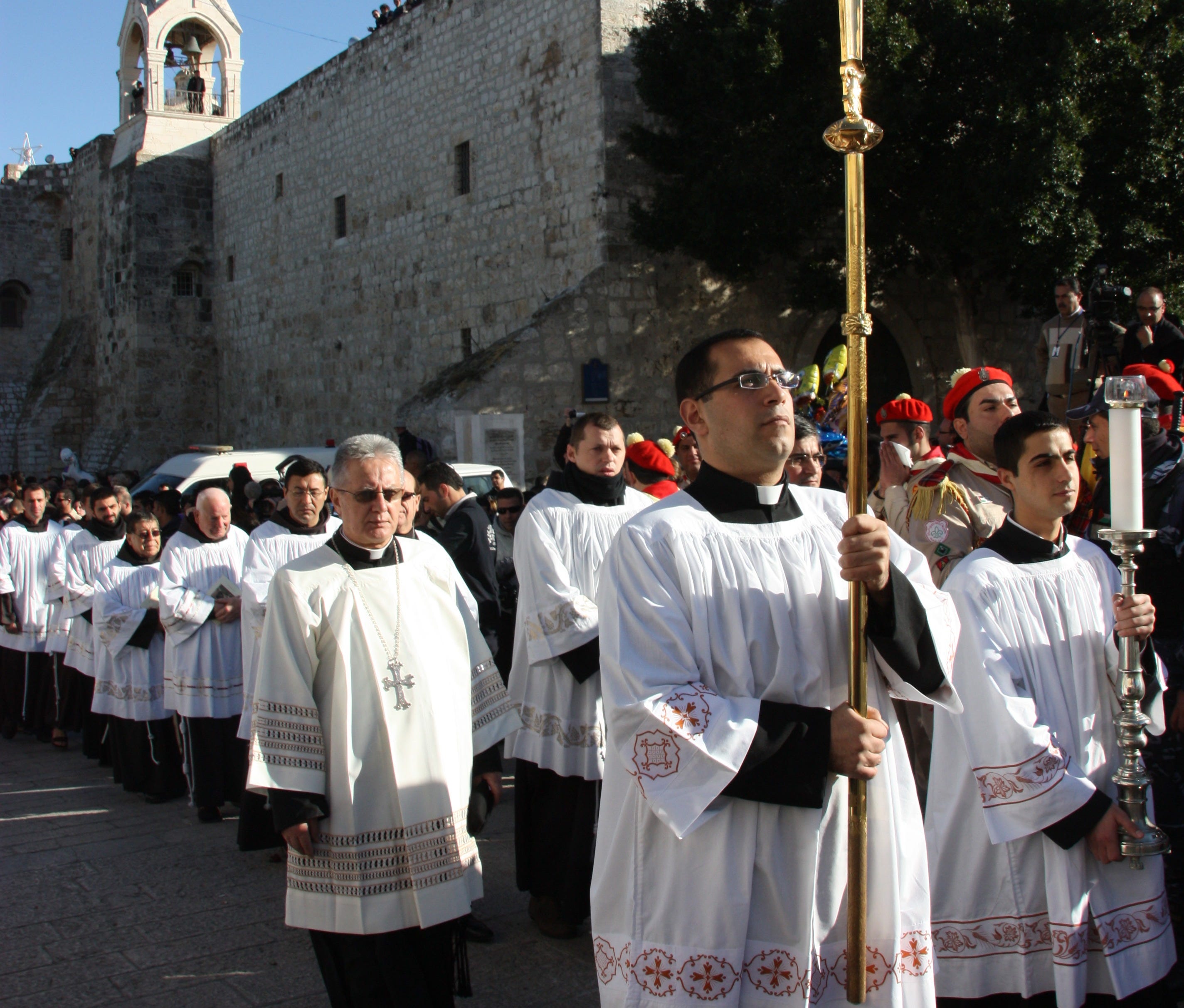
The Entrance Chant opens the celebration. It is the first act of the liturgy proper, and if the music chosen does not quite fit the nature of an ‘opening piece’ then whatever comes next might fall flat. The Entrance Chant needs to be uplifting in nature, something that draws the assembled people into what is beginning, allowing them to enter into the worship of God that is inherent to the liturgy.
The Entrance Chant must foster the unity of those who have been gathered. In other words, this piece of music must continue to process of drawing the assembly to gather. The process of gathering, as we have previously discussed, doesn’t begin with the opening note of the Entrance Chant, but rather the Entrance Chant concludes the gathering that has already taken place.
The Entrance Chant also introduces the thoughts of the gathered assembly to what they are now beginning to celebrate. The music chosen must draw on the liturgy itself for inspiration in choice. It cannot simply be any old piece of music, or simply something the assembly always sings. It must draw on the time of year (Christmas, Easter, Pentecost, etc), or the Scripture readings on that particular occasion, or the texts of the prayers that will be prayed, etc.
If care is not exercised in choosing an appropriate piece of music to be used as the Entrance Chant then it is entirely possible that the Entrance Chant will not do what it is intended and required to do.
And lastly, the Entrance Chant accompanies the entrance of the Presider and other ministers (also known as the ‘Entrance Procession’). You will notice that this aspect is the last of the listed purposes of the Entrance Chant and, as such, is the least important of the purposes.
The Entrance Chant is not primarily about the Entrance Procession, and it does not stop when the Presider and ministers have reached the sanctuary and are in their respective places ‘ready to begin’. And this is highlighted on some occasions when the Entrance Chant does not signal the beginning of the Entrance Procession, with an obvious gap in place between the beginning of the former and the beginning of the latter.
In other words, the music doesn’t magically stop just because the Presider has reached his chair. It continues until it has been sung as it was intended to be sung, this allowing the gathered people to complete this first act of worship in the larger context of the entire act of worship that is the celebration of Eucharist.
So, when you look at what the Entrance Chant is meant to achieve, it quickly becomes apparent that this is no mere decorative feature, something simply added on. It must surely also be apparent that the purpose of the Entrance Chant means the sometimes desired ‘Quiet Mass’ (i.e., a Mass with no music whatsoever) is something that in ordinary circumstances cannot be defended as even a remote possibility (notwithstanding the resources that may or may not be available in any given location on any given occasion). The Entrance Chant plays too important a role in the overall structure of the Mass for it to be easily jettisoned.
And if those are the purposes of the Entrance Chat, what form might it take? Well, that can wait until Part 4.
To be continued…