
The Introductory Rites - Part 2
Part two of a series I'm writing for inclusion in the weekly Parish Bulletin of St Francis of Assisi Parish, Dungog Gresford

Having looked in Part 1 of the general purpose of the Introductory Rites, i.e., “to ensure that the faithful, who come together as one, establish communion and dispose themselves properly to listen to the Word of God and to celebrate the Eucharist worthily”, let’s have a look at the overall structure of the Introductory Rites, before we then move on to look at each element individually.
The Introductory Rites usually consists of the following individual elements:
The Entrance
Reverence to the Altar
Greeting of the Assembled People
The Penitential Act
The Kyrie Eleison
The Gloria
The Collect
It should be stressed that this structure is that which is usual at a Sunday Mass and, in a slightly altered form, for a weekday Mass.
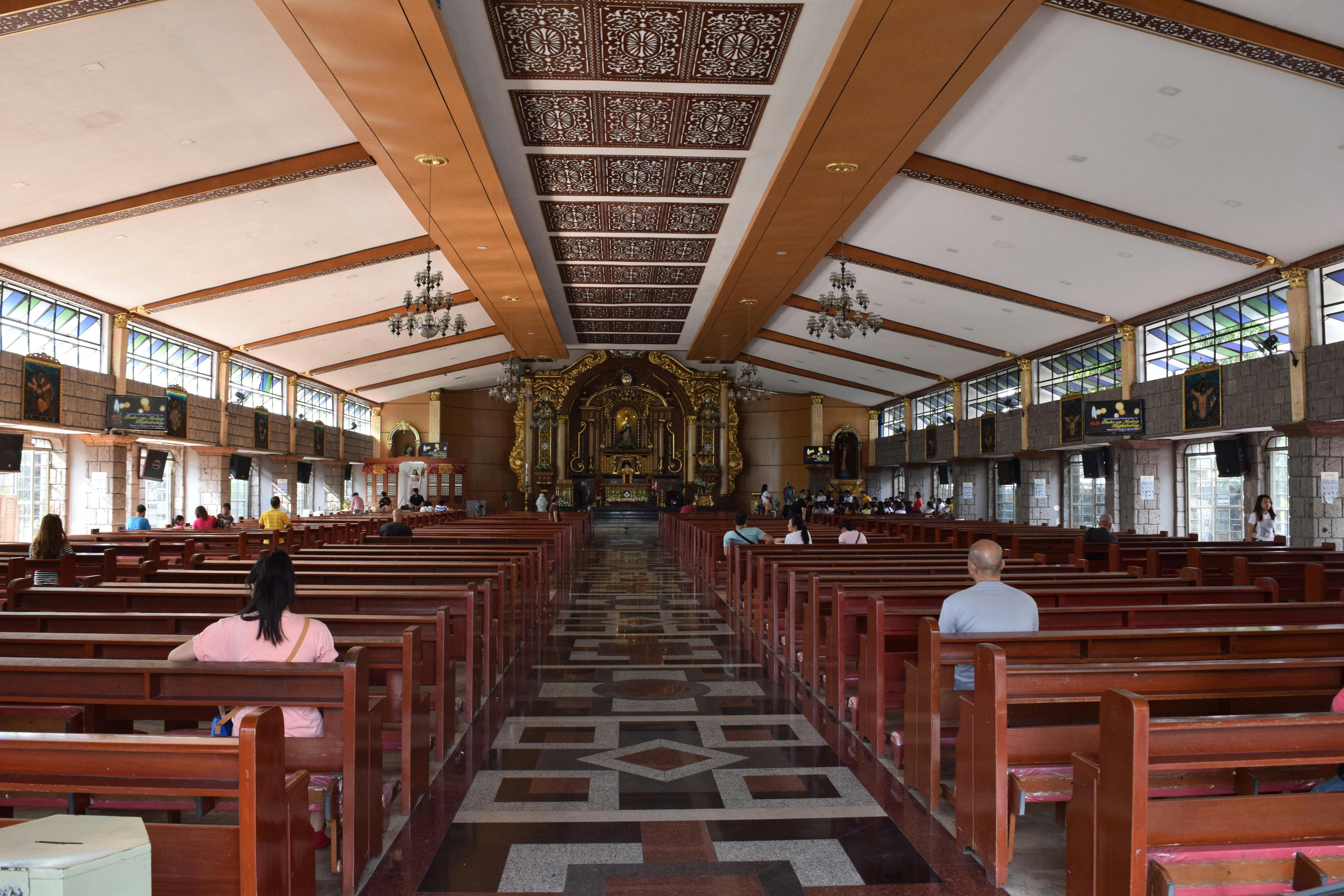
There are occasions, however, when the elements outlined take a different format, as the GIRM itself recognises in n.46: “In certain celebrations that are combined with Mass according to the norms of the liturgical books, the Introductory Rites are omitted or take place in a particular way”.
The most obvious example of this is during a funeral celebrated during Mass, when the placing of Christian symbols supplants part of the usual pattern, replacing as it does the Penitential Act.
Another example is when Baptism is celebrated during Mass on a Sunday, when the Greeting takes place at the door of the church building, and is followed by the Presider asking parents the questions that are required. This is then followed by the Entrance and the Reverence to the Altar, and then immediately moves to the Gloria.
Other similar adaptations occur whenever Mass is combined with the celebration of the Sacraments.
So, while the list of elements outlined above is in the usual pattern, this is not exclusively the case.
Having made that clarification, let’s move on to begin looking at each of these elements individually.
The first element is The Entrance, which is when the Presider and other ministers (where there are other ministers) enters the church building. The name of the element really gives the whole thing away, doesn’t it.
What is less known, however, might be the short phrase that proceeds the instruction for the Presider to enter the church building, as n.47 of the GIRM begins thus:
“When the people are gathered, and as the [Presider] enters with the Deacon and ministers, the Entrance Chant begins.”
“When the people are gathered”. Not when the Presider is ready, not when it’s convenient, but when the people are gathered. And as indicated briefly last week, this moment of gathering can be nebulous and uncertain.
This requirement also means that it is simply impossible for Mass to begin before the scheduled time, though it might mean that Mass begins after the scheduled time for any number of reasons.
In some parts of the world, where a more flexible approach to time is prevalent, this moment ‘when the people have gathered’ might even be harder to determine.
The other observation that must be made at this point is that there is no mention of any introductory remarks being made before the Entrance Chant begins. There is no mention of anyone getting up and welcoming those who have gathered, or introducing the occasion, or the like. It is as simple as ‘when the people have gathered’ ‘the Entrance Chant’ begins.
And what is this Entrance Chant? Well, that can wait until Part 3.
To be continued…