
The Introductory Rites - Part 11
Part eleven of a series I'm writing for inclusion in the weekly Parish Bulletin of St Francis of Assisi Parish, Dungog Gresford

At the end of Part 10, the Assembly’s voice had fallen silent after singing God’s praises in the Gloria, and we were ready to embark on the last element of the Introductory Rites: the Collect.
The General Instruction of the Roman Missal says about the Collect:
“Next the [Presider] calls upon the people to pray and everybody, together with the [Presider], observes a brief silence so that they may become aware of being in God’s presence and may call to mind their intentions. Then the [Presider] pronounces the prayer usually called the ‘Collect’ and through which the character of the celebration finds expression. By an ancient tradition of the Church, the ‘Collect’ prayer is usually addressed to God the Father, through Christ, in the Holy Spirit…” (n.54)
This short paragraph describes both the purpose of the Collect – to give expression to the character of the celebration – and the structure of this particular element of the Introductory Rites.
So, let’s have a look at the structure of the Collect.
The basic structure of the element is:
· Invitation
· Silence
· The Prayer
· The Conclusion
· The Assent
The first part of the Collect is the Invitation, the very simple “Let us pray” voiced by the Presider, which both indicates the opening of this element as well as reminding the Assembly of what happens next, i.e., each member of the Assembly prays, bringing those situations and concerns they have been experiencing to mind and placing them before God.
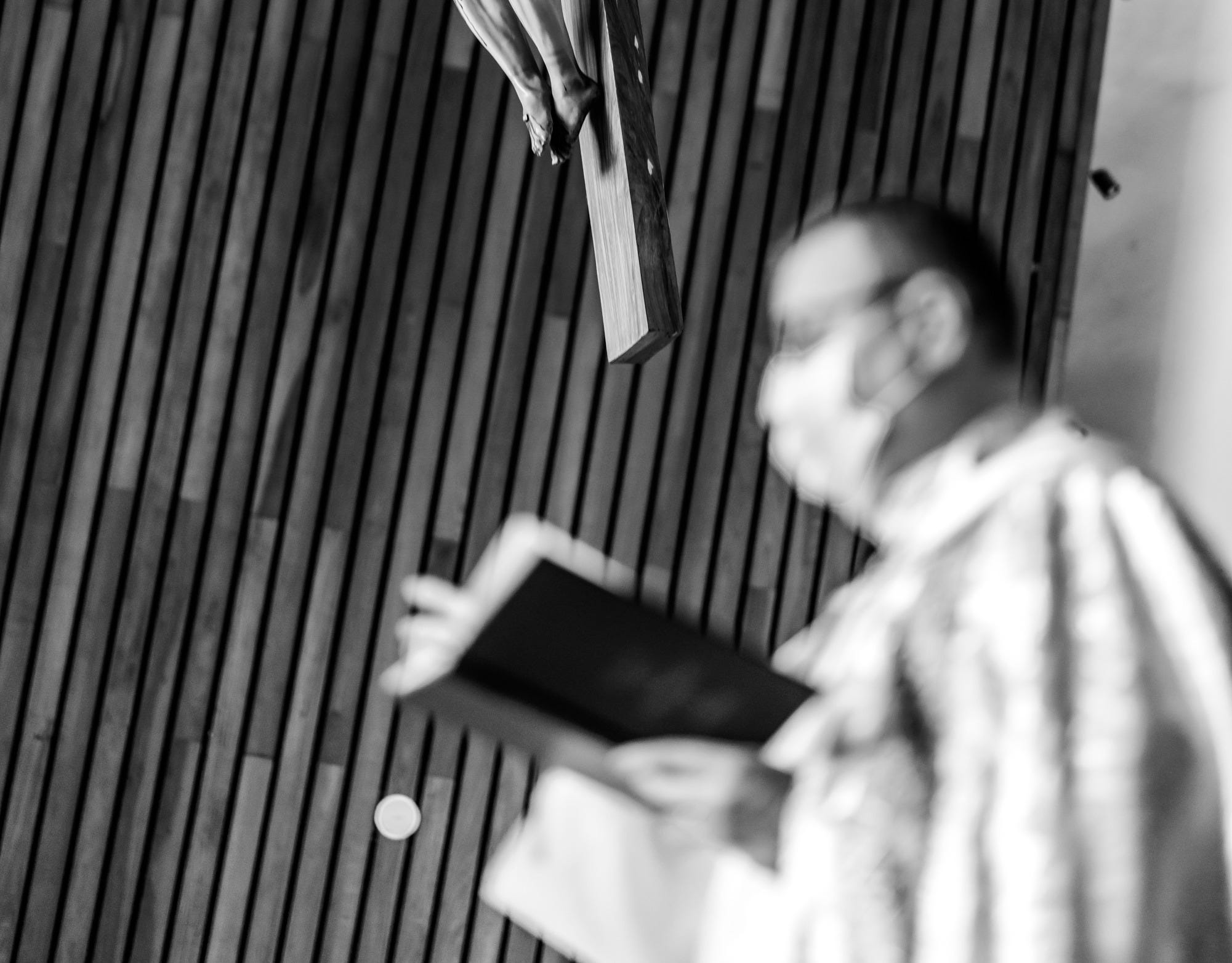
And that is why the second part – the silence – is important. As we have already seen in this series, the opportunity to pray in this instance requires a period of silence. It does not need to be overly long, but it does need to be obvious, a true chance for members of the Assembly to do that which they have been invited to do.
After this silence, the Presider prays on behalf of and in the name of the entire Assembly the Collect prayer that is required for the particular occasion that is being celebrated.
These Collects are found in the Roman Missal or other ritual books and are crafted by the Church to reflect the particular nature of why the Assembly has gathered on the particular occasion in question.
The Collect prayer also has a recognisable format of its own which, while not the focus of this column per se, can be briefly summarised thus:
· The addressing of the Divine
· The mention of some characteristic of God
· A petition for God to do something
· A conclusion
This conclusion, which is part of the overall structure of the Collect element, is always Trinitarian in nature and takes particular forms depending on what has gone before it. These forms, three in total, are outlined in the General Instruction in n.54.
The last part of the Collect element is the assent, by which the Assembly add their voice to the prayer that has been voiced by the Presider on their behalf. This “Amen” should be resolute without being shouted, clear without being overly loud, deliberate rather than pedestrian.
And at the end of the Collect, after the Amen has been spoken, the entire Assembly is seated as they prepare for the Liturgy of the Word which we have already covered in a previous series. And the first thing that should happen after everyone is seated, as mentioned in the previous series, is the keeping of a short silence to mark the transition from the Introductory Rites to the Liturgy of the Word.
Before concluding our reflection on the Collect, there’s one small item of interest that many people might find a strange inclusion in the General Instruction. The very last sentence in n.54 says, “At Mass only a single Collect is ever said.”
This injunction might seem strange, but it reflects a change from the pre-conciliar liturgy when there could be multiple Collects prayed during Mass in order to honour multiple events in the calendar if they coincided with each other. The conciliar reform of the Liturgical Calendar now renders this requirement unnecessary.
Which brings us to the end of our examination of the Introductory Rites. Next week we will conclude this series with a short summary and reflection on the Introductory Rites that we have explored over the last few months before bringing this series to an end.
To be continued…